Antilipid Peroxidation And Anti-radiation Effects Of Total Glycosides Of Cistanche Deserticola
Mar 16, 2023
Li Linlin, Wang Xiaowen, Wang Xuefei, Mu Hu, Ya Tidu, born in (Urumqi 830054, Xinjiang Medical College)
abstract
Total glycosides of cistanche deserticola (GCs) can significantly enhance the SOD activity of mouse erythrocytes, reduce the content of serum MDA, increase the content of DNA and RNA in liver and kidney tissues, significantly promote the recovery of SOD activity of mouse erythrocytes and nucleic acid content of spleen after 60Co irradiation, and reduce the content of liver MDA, suggesting that the protective effects of GCs on nucleic acid and radiation protection are closely related to their anti-lipid peroxidation effect.

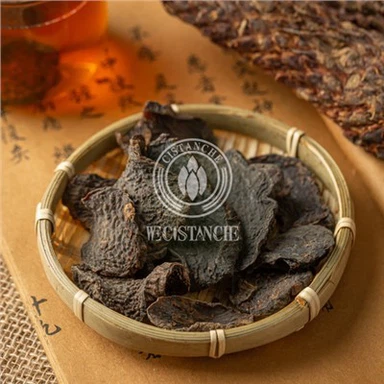
Desert ginseng—Cistanche deserticola florescence
keyword:Total glycosides of cistanche deserticola; DNA; RNA; Anti-lipid peroxidation; radiation protection
"Desert ginseng"Cistanche deserticola ma has the effects of modifying the middle and benefiting qi, essence, and yang. Among the ancient anti-aging prescriptions, the probability of its appearance is second only to ginseng. It has been reported in recent literature that Cistanche deserticola can enhance the immune function of the body [1]; Promote memory and intelligence; Regulate the nervous system, improve sexual function, and anti-aging [2]. The crude preparation of Cistanche deserticola can enhance the SOD activity of mouse erythrocytes; Significantly reduce the content of myocardial lipofuscin [3]; Improve the DNA synthesis ability of Yang-deficiency animals and significantly prolong the life span of Drosophila [4]. However, the pharmacological effects of total glycosides of cistanche deserticola (GCs) have not been reported at home and abroad. The purpose of this study is to explore the protective effect of cistanche deserticola on nucleic acid and the relationship between radiation protection and anti-lipid peroxidation.

Desert living cistanche
1. Material and methods
1.1 Drugs and reagents
The total glycosides of Cistanche deserticola, extracted from Cistanche deserticola C.A.Mey., a salt-producing cistanche in northern Xinjiang, are mainly composed of phenylethanoid glycosides. The extraction method is carried out according to Japanese literature (Public License Bulletin (A) Zhao63-198627) and is provided by Professor Chou Nian of the Department of Pharmacy of our college. Thiobarbital acid, produced by Shanghai No. 1 Reagent Factory; DNA and RNA standards were provided by Shanghai Milk Company and Institute of Biochemistry, Chinese Academy of Sciences respectively. Both of them were tested for purity according to the phosphorus determination method [5].
1.2 Anti-lipid peroxidation of cistanche deserticola (GCs)

Click here to view Cistanche products
【Ask for more】 Email: xue122522@foxmail.com / Whats App: 0086 18599088692 / Wechat: 18599088692
110 NIH mice, weighing (22.5 ± 2.1) g, both male and female, were randomly divided into four groups: the control group was given 20 ml · kg-1 · d-1 normal saline (NS) by gavage (ig); In the GCs group, GCs62.5125250 mg · kg-1 · d-1 was given for 18 days respectively, and the eyeball was taken for 50 blood samples after the last administration for 2 hours μ L SOD activity in red blood cells; The remaining blood was used to prepare serum and measure the content of serum MDA; Quickly take heart, liver, brain, kidney, and other organs, wash them with ice physiological saline, prepare tissue homogenates, and prepare erythrocyte SOD extract according to the literature [6]. Preparation of DNA and RNA extraction solution: take heart, liver, brain, and kidney, weigh them, cut them into pieces, and put them into a grinding bowl, add 2ml, 15% trichloroacetic acid, grind them into homogenate in an ice bath, transfer them into a centrifuge tube, and then wash the grinding bowl with 2ml, 15% trichloroacetic acid, a total of 3 times. All the washing solution is transferred into a centrifuge tube, centrifuge 4000r · min-1, 10min, and discard the supernatant is. Add 2ml of anhydrous ethanol into the precipitation, mix well, heat it in a 90 ℃ water bath for 2min, cool it, and centrifuge it for 4000r · min-1, 10min, and discard the supernatant. Add 8 ml of 5% trichloroacetic acid into the sediment, mix it, put it in a 90 ℃ water bath for extraction for 15 minutes, cool it and centrifuge it for 4000r · min-1,10 minutes, pour the supernatant into a 10 ml volumetric flask, add 1 ml of 5% trichloroacetic acid into the sediment, mix it well, centrifuge it for 4000r · min-1,5 minutes, and pour the supernatant into a 10 ml volumetric flask, dilute it with distilled water, and mix it well. The extraction solution of DNA and RNA has been prepared. Biochemical indexes were measured: the SOD activity of erythrocyte was determined by the pyrogallol autoxidation method [7]; The content of serum MDA was determined by the TBA color method [8]; The content of DNA and RNA in each tissue was determined by diphenylamine chromogenic method and moss black phenol chromogenic method [5].
1.3 Anti-radiation effect of GCs
120 NIH mice weighing (21.0 ± 2.2) g, both male and female, were randomly divided into 4 groups: normal group, NS20ml · kg-1 · d-1, 18 days in total; The other 90 rats received 60Co γ One time of whole-body irradiation with a radiation dose of 6Gy, and then divided into injury group: NS20ml · kg-1 · d-1 was given immediately after irradiation; GCs treatment group: after irradiation, 125250 mg · kg-1 · d-1 was given for 18 days respectively. After the last dose of each group for 2 hours, the activity of SOD in erythrocyte, the content of MDA in the liver, the content of DNA and RNA in liver and spleen tissues, and the histomorphology of liver and spleen were measured respectively according to the above experimental methods. All data were expressed with x ± s, and a t-test was performed between groups.
2. Results
2.1 Antilipid peroxidation of cistanche deserticola (GCs)
2.1.1 Effect of GCs on SOD activity in erythrocyte and MDA content in the serum of normal mice
It can be seen from Table 1 that there is no difference between the GCs62.5mg · kg-1 group and the control group (P>0.05). GCs125250 mg · kg-1 group significantly increased the activity of SOD in erythrocytes (P<0.01) and decreased the content of MDA in serum (P<0.05).
Table 1 Effect of cistanche deserticola on SOD activity in erythrocyte and MDA content in serum of normal mice

Note: ① x ± s ② control group n=20cistanche deserticola group n=30 ③ compared with control group 1) P<0.052) P<0.01 (the same below)
2.1.2 Effect of cistanche deserticola (GCs) on DNA content of various organs in normal mice
It can be seen from Table 2 that compared with the control group, the DNA content of the heart and brain in each administration group has no significant difference (P>0.05).cistanche deserticola 62.5mg · kg-1 group had no effect on the DNA content of the liver and kidney; The content of DNA in the liver of cistanche deserticola 125mg · kg-1 group and 250mg · kg-1 group increased by 9.6% (P<0.05) and 14.2% (P<0.01) respectively compared with the control group; Compared with the control group, the content of DNA in kidney increased by 15.4% and 16.0% respectively (P<0.01).
Table 2 Effect of cistanche deserticola on DNA content of various organs in normal mice

2.1.3 Effect of cistanche deserticola (GCs) on RNA content in various organs of normal mice
It can be seen from Table 3 that compared with the control group, there is no significant difference in the content of RNA in the heart and brain of each administration group (P>0.05). cistanche deserticola 62.5mg · kg-1 group had no effect on RNA content in the liver and kidney; The liver RNA content of cistanche deserticola 125250 mg · kg-1 group was 18.1% and 26.2% higher than that of the control group, respectively (P<0.01); Compared with the control group, the renal RNA content increased by 20.9% and 25.4% respectively (P<0.01).
Table 3 Effect of cistanche deserticola on RNA content in various organs of normal mice

2.2 Antiradiation effect of total glycosides of cistanche deserticola (GCs)
2.2.1 Effect of cistanche deserticola (GCs) on SOD activity in erythrocyte and MDA content in the liver of irradiated mice
It can be seen from Table 4 that the SOD activity in red blood cells of the injured group decreased by 46.8% compared with that of the normal group (P<0.01), and that of the cistanche deserticola 125250 mg · kg-1 treatment group increased by 52.1% and 52.4% respectively compared with that of the injured group (P<0.01). The content of liver MDA in the injured group was significantly higher than that in the normal group by 24.3% (P<0.01). The content of liver MDA in each treatment group was significantly lower than that in the injured group by 18.4% and 17.9% (P<0.01), which was slightly higher than that in the normal group (P>0.05).
2.2.2 Effect of cistanche deserticola (GCs) on DNA and RNA content in the liver of irradiated mice
The contents of DNA and RNA in the liver of the injured group were lower than those of the normal group, but there was no significant difference (P>0.05); The content of DNA and RNA in the liver of the treatment group was slightly higher than that of the injury group, but the difference was not significant (P>0.05).
Table 4 Effect of cistanche deserticola on SOD activity in erythrocyte and MDA content in liver of irradiated mice

Note: n=30 compared with radiation group 1) P<0.052) P<001 (the same below)
2.2.3 Cistanche deserticola (GCs) effect on DNA and RNA content in spleen of irradiated mice
It can be seen from Table 5 that the DNA content of spleen in the injured group was 15.5% lower than that in the normal group (P<0.01), and each treatment group was 14.9% and 15.2% higher than that in the injured group (P<0.01), both of which were close to the normal group (P>0.05). The RNA content of spleen in the injured group was 18.6% lower than that in the normal group (P<0.05), and the treatment groups were 15.0% and 20.3% higher than that in the injured group (P<0.01), which were close to the normal group (P>0.05).
Table 5 Effect of cistanche deserticola on DNA and RNA content in spleen of irradiated mice

2.2.4 Effect of cistanche deserticola (GCs) on histomorphology of spleen in irradiated mice
Figure 1It can be seen that the nuclear staining, DNA content, cytoplasmic staining, and RNA content in the splenic corpuscles of the injured group and the normal group are lighter than those in the splenic white pulp. Compared with the injured group, the GCs125mg · kg-1 group showed that the overall structure of the spleen was close to normal, the nucleus of spleen corpuscles was stained with dark purple, the content of DNA was significantly increased, the cytoplasm was stained with dark red, and the content of RNA was significantly increased.
2.2.5 Effect of cistanche deserticola (GCs) on liver histomorphology of irradiated mice
Figure 2It can be seen that the nuclear staining of the liver around the portal area of the liver lobule in the injured group is lighter than that in the normal group, the DNA content is significantly lower, the cytoplasmic staining is lighter, and the RNA particles of the liver cells are significantly reduced. The nuclear staining of the liver around the portal area of the liver lobule in the cistanche deserticola 125mg · kg-1 treatment group is dark purple, the DNA content is significantly increased, the cytoplasmic staining is dark red, and the RNA content is significantly increased.

Cistanche tea—Antioxidant
3 .Discussion
The activity of SOD in human erythrocytes decreased significantly with aging, but the content of serum peroxide increased gradually [9]. This paper observed that the cistanche deserticola group significantly increased the SOD activity in the red blood cells of mice, decreased the content of serum MDA, and increased the content of DNA and RNA in liver and kidney tissues, indicating that cistanche deserticola can supplement the consumption of SOD or reduce the decline of SOD activity, thus enhancing the ability to eliminate endogenous free radicals, slowing down the rate of lipid peroxidation in the body, enhancing the antioxidant ability, and reducing the damage of free radicals to nucleic acids and other biological macromolecules, It is suggested that the protective effect of cistanche deserticola on nucleic acid is related to its anti-lipid peroxidation effect. It is also suggested that cistanche deserticola may promote the synthesis of nucleic acid, slow down the decomposition and destruction of nucleic acid, and further promote the synthesis of protein, thus contributing to the generation of immune substances, accelerating the repair and regeneration of tissue cells, and improving the body's defense ability [6]. Its mechanism of action needs to be further studied. It has been reported in the literature that enhancing the immune function of the body can delay premature aging, and the essence of aging is closely related to nucleic acid metabolism [10]. Therefore, combined with the anti-lipid peroxidation effect and immune enhancement effect of cistanche deserticola, it is suggested that cistanche deserticola have the effect of delaying aging.
Fig. 1 Effect of cistanche deserticola on the histomorphology of spleen in irradiated mice

A. Saline control group (A1 × 800A2 × 200) B. Radiation injury group (B1 × 800B2 × 200) C.GCs125mg · kg-1 group (C1 × 800C2 × 200)
Fig. 2 Effect of cistanche deserticola on liver histomorphology of irradiated mice

D. Saline control group (D1 × 800D2 × 200) E. Radiation injury group (E1 × 800E2 × 200) F.GCs125mg · kg-1 group (F1 × 800F2 × 200)
After 60Co irradiation, the body can produce a large number of toxic oxygen free radicals, cause a strong lipid peroxidation reaction, destroy nucleic acids, proteins, enzymes, and other biological macromolecules, and cause cell and tissue damage [11]. It can be seen that the damaging effect of radiation is closely related to lipid peroxidation. In this experiment, the cistanche deserticola treatment group can significantly promote the recovery of SOD activity in erythrocytes and nucleic acid content in the spleen of irradiated mice, and inhibit the formation of lipid peroxide in the liver.

Cistanche powder—Antioxidant
It shows that the radiation protection effect of cistanche deserticola is closely related to the protection of free radicals. Histomorphology also showed that cistanche deserticola could restore the tissue structure of the liver and spleen after irradiation, and could promote the recovery of nucleic acid, suggesting that the radiation protection of cistanche deserticola was also related to its anti-lipid peroxidation effect, and its mechanism needed to be further explored.
reference
1.Gao Haiqian. Research on traditional Chinese patent medicines and simple preparations, 1984; 11(11):34
2. Sato Tio et al. Foreign Medicine · Traditional Chinese Medicine Volume, 1987; 9(6):33
3.Li Qiaoru et al. Shanghai Journal of Traditional Chinese Medicine, 1990; (11):22
4.Yu Nancai et al. Chinese Journal of Traditional Chinese Medicine, 1990; 15(6):22
5. Zhang Longxiang, et al. Beijing: People's Education Press, 1984:217
6. Ding Kexiang, et al. Journal of Gerontology, 1987; 7(2):42
7.ZhouGLetal.BiochemiBiophys,1986; 4:71
8 .Chen Shunzhong et al. JClinLabTech, 1984; 2(4):7
9. Wu Li et al. Journal of Gerontology, 1990; 10(6):353
10. Liu Junda. Journal of Gerontology, 1993; 13(6):375
11.KergononJFetal.Biochimi,1981; 63:555