Rehabilitation Of Alzheimer's Disease Caused By Radiation
Mar 07, 2023
Alzheimer's disease
Alzheimer's disease is a degenerative disease of the central nervous system with an insidious onset and a chronic progressive course. It is a common type of senile dementia. The main manifestations are neuropsychiatric symptoms such as progressive memory impairment, cognitive dysfunction, personality changes, and language barriers, which seriously affect social, occupational, and life functions.
Radiation has a significant effect on memory loss and can be found to be a contributing factor to diseases such as Alzheimer's disease. Studies conducted by scientists at the University of Texas Medical Branch in Galveston ran trials on rats to explain how radiation affects memory loss.

The rats were administered small doses of radiation and their memory was tested. The results showed that radiation has an effect on the Amygdaloid, which plays an extremely important role in preserving one's memory. Amygdaloid plays a very important key role in emotional reactions and memory association of sight and sound. Due to the exposure to radiation, the rats in the study showed a decrease in the performance of memory-related tasks, as well as other activities associated with the Amygdaloid.
The results highlighted the link between radiation and damage to the brain, which can manifest in the form of Alzheimer's disease. This is particularly true for plant extract honokiol, which is found in the common Milkweed Plant, and whose studies have shown to have benefits in fighting Alzheimer's disease.
Overall, radiation has a definite effect on memory, even in small doses. The damage that it can do to the brain can cause issues with memory, and further research into the effects of radiation might yield more information on how it affects memory and other factors of the brain.
How to Prevent Alzheimer's Disease
In addition to certain genetic factors, the cause of Alzheimer's disease is inseparable from people's living habits, so we can prevent it by adjusting living habits in daily life.
Think more to keep your brain active
No matter what age you are, it is necessary to maintain the flexibility of your brain. If you don't use your brain for a long time, it is easy to have a decline in response and effort to think about problems. If things go on like this, it will bury the root of disaster. In life, you can pay attention to some problems that require mental activities, and train your ability to respond, read more, read more, and think more. Of course, you must also pay attention to the balance between work and rest to avoid new injuries caused by excessive use of the brain.
Get enough exercise
It has been a truth since ancient times that proper exercise is helpful to physical and mental health. Exercising more can help the elderly slow down cognitive decline, which plays an important role in maintaining brain health.
Avoid being alone
It is best for the elderly to communicate with relatives and friends around them every day. They can go to crowded squares or parks to make more friends. Everyone can play Tai Chi, dance square dance, play chess, and do other elderly activities together to maintain physical and mental vitality and avoid the Negative effects of being alone.
Alzheimer's disease stages
1. Mild dementia
Main manifestations: often forget what happened.
2. Moderate dementia
Main manifestations: often can't find the way home, and the action will become sluggish.
3. Severe dementia
At this time, the patients suffer from long-term memory loss, and some do not even know their relatives, and even become comatose for a long time.
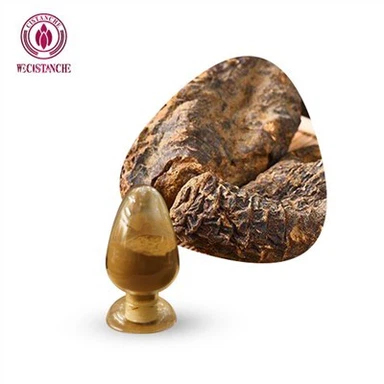
4. Cistanche
Experimental studies have shown that total glycosides of Cistanche can improve the learning and memory level of AD mice induced by QA, reduce the MDA content of brain tissue induced by QA, increase the activity of GSH-Px and SOD, reduce the activity of TChE, the apoptosis rate of brain cells and reduce the Calcium buildup. The total glycosides of Cistanche can also have a good protective effect on the ultrastructure of the hippocampus of the brain aging model mice induced by D-galactose, and there is a dose-effect relationship. It is speculated that the total glycosides of Cistanche can delay aging and prevent senile dementia through the antioxidant mechanism effect of the disease. Therefore, the traditional Chinese medicine Cistanche extract can effectively treat Alzheimer's disease and significantly improve learning and memory ability.

Click On Cistanche Tubulosa For Alzheimer's Disease
FOR MORE INFORMATION:david.deng@wecistanche.com
Alzheimer's disease can adopt methods of adjustment, adaptation, compensation, and special care through rehabilitation methods to preserve the remaining functions of the elderly with dementia as much as possible, maintain the independence of life of the elderly as much as possible, reduce dependence on others, and improve the health of the elderly. Quality of Life. Below, I will introduce several methods of rehabilitation training.
Alzheimer's disease rehabilitation
Exercise and Occupational Therapy
Exercise therapy carries out gradual and persistent training according to the patient's exercise ability. Occupational therapy aims to treat and train patients by selecting some occupational activities to improve their daily life and workability. Commonly used occupational therapy includes memory training, communication skills training, sense of direction training, sense of time training, social training, etc.

Cognitive function rehabilitation training
Including memory function training, attention training, problem-solving ability training, orientation ability training, loss of authentication, apraxia training, etc. Through the one-on-one treatment of patients with therapists, the aim is to increase or improve the individual's ability to deal with problems and to apply the acquired information to strengthen the functional activities of daily life and improve the dysfunction caused by brain injury.
Speech and Swallowing Therapy
It can improve the patient's language comprehension and expression ability, and improve the patient's language communication ability. Severe dementia patients are prone to eating difficulties in the later stage, and swallowing therapy can improve patients' eating problems.
Physical factor therapy
Evaluate the patient's condition, screen indications, exclude contraindications, and carefully select the appropriate physical factor therapy for the patient. The methods we often use in our department mainly include the following:
Repetitive Transcranial Magnetic Stimulation (rTMS) is a painless and non-invasive method of cortical stimulation that can improve cognitive function in patients with Alzheimer's disease by regulating neuroplasticity, brain networks, neurotransmitters, and nutritional factors. and psychobehavioral symptoms.
Transcranial direct current stimulation (tDCS), as a non-invasive brain neuromodulation technology, has been proven to have a good effect on cognitive dysfunction caused by brain injury.
Cerebral circulation therapy instrument is based on brain physiology, magneto biology, and clinical encephalopathy therapy. By generating a safe and effective negative polarity alternating magnetic field, it is placed on the forehead, temporal, parietal, and occipital parts of the head. Cerebral blood vessels protect the nerves, improve cerebral blood flow, and promote the recovery of brain function.
Others include median nerve stimulation, EEG biofeedback, and so on.
Traditional therapy
The traditional treatment rooms in the rehabilitation center carry out many traditional treatment items such as acupuncture, cupping, moxibustion, and bloodletting. Among them, the scalp has a significant therapeutic effect on dementia patients. Modern studies have shown that acupuncture can increase blood flow in various brain regions to varying degrees.

The treatment of all dementia patients, including Alzheimer's disease, is a long-term process, but in this process, we are committed to addressing the common concerns of patients and their families. If Alzheimer's disease is a kind of slow motion of God's farewell, then we will try our best to keep more good memories and make the farewell come later.